P&W and MTU Reveal Future Engine Demonstrator Project
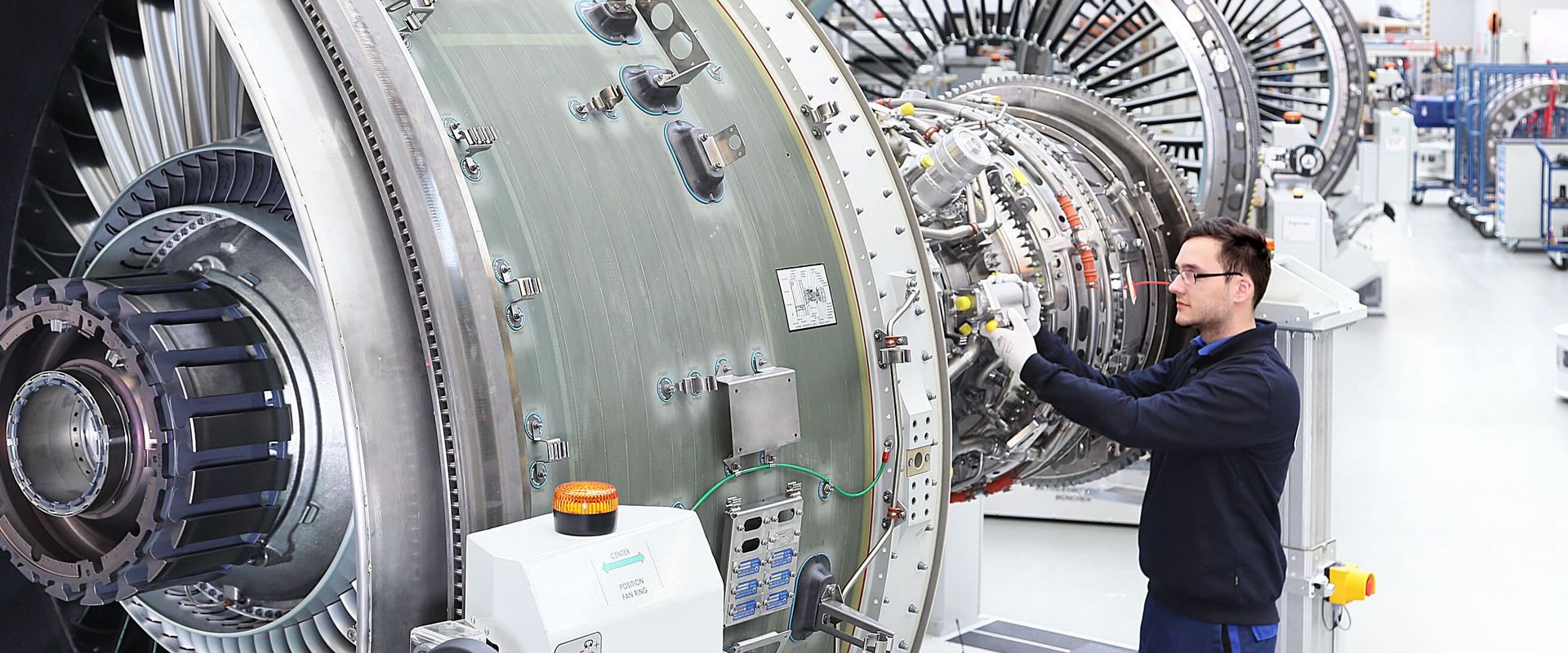
Airbus, Collins Aerospace, GKN Aerospace, MTU and Pratt & Whitney are jointly exploring the potential efficiency gains of combining a water-injecting turbofan with hybrid-electric power, and plan to conduct a ground demonstrator test by 2025.
The project, named SWITCH (sustainable water-injection turbofan hybrid-electrics), is part-funded by the EU's Clean Aviation programme and co-ordinated by MTU. The German engine subassembly manufacturer and maintenance provider previously studied the benefits of what it terms a water-enhanced turbofan.
The concept involves water vapour inherent in a gas turbine's exhaust stream being condensed and subsequently injected, as water steam, into the engine's combustor. MTU says this improves combustion efficiency and will reduce fuel consumption, nitrogen oxide (NOx) emissions, and contrail formation because particulates in the exhaust stream that serve as condensation nuclei in the atmosphere are filtered out.
Under the Clean Aviation project, the partners want to combine that architecture with electric motor-generators in the engine core. This, they foresee, will provide supplemental power to optimise the gas turbine performance "across all phases of flight".
A Pratt & Whitney PW1000G-series engine will be configured with the technology for ground demonstrator tests at MTU facilities during the project's first phase, running from next year through to 2025. Flight tests could be conducted as part of a second project phase in 2026, P&W chief sustainability officer Graham Webb indicated during a media briefing on 28 November. This will depend on the first phase's results. Funding has been secured for the first phase, MTU notes.
The demonstrator will be fully compatible with sustainable aviation fuel. Additionally, the partners want to evaluate hydrogen use.
Overall, the team has a target of reducing fuel consumption by a quarter versus latest-generation engines, cut NOx emissions 80%, and "significantly" reduce contrail formation.
However, Airbus head of electrification Karim Mokaddem – also present during the briefing – observes that the fuel savings, especially in regard to hybrid-electric power, will be a result of integrating the engine more closely with the aircraft's wider systems and achieving greater efficiency overall.
Airbus's main objective for the project, he says, is to explore the hybrid technology and determine potential savings. "We have the direction but have not assessed benefits."
To make a hybrid architecture feasible, he says, battery energy density would need to be twice as high as current levels. The relatively high weight of batteries is the main obstacle of using hybrid-electric power architectures for large aircraft.
Optimising energy usage throughout the aircraft will therefore be central to ensure that individual benefits of the new engine architecture "are not killed", Mokaddem says. He adds that insights from the project will determine on which platforms such technology could be employed.
The PW1100G is available as an option on A320neo-family jets, in competition with CFM International’s Leap-1A. The PW1500G, meanwhile, is the sole powerplant available on the A220.
Airbus is separately assessing with CFM the possibility of hydrogen-power and an open-fan architecture. Joint test flights with the engine manufacturer of a hydrogen-fuelled demonstrator engine on a modified A380 are planned for 2026 and, in a separate effort, with an open-fan demonstrator during the second half of the decade.
The engine manufacturer, jointly owned by GE Aerospace and Safran, is meanwhile working within its RISE programme on an open-fan demonstrator, with hybrid-electric capability, which can be fuelled with SAF or hydrogen.
Mokaddem acknowledges the architectural differences of these engine concepts but argues all available technologies and options need to be considered at this stage. It is "not yet time" for competition, he says, as the opportunities offered by the different technologies have yet to be assessed.
Airbus plans to develop a zero-emission aircraft for service entry around 2035.
Under the SWITCH effort, MTU will be responsible for the steam turbine, water recovery unit and demonstrator ground testing. P&W will develop the water steam-injecting combustor and hybrid-electric system integration.
Raytheon Technologies group sibling Collins Aerospace, meanwhile, will supply a 500kW motor-generator for the demonstrator's high-pressure spool, a 1MW motor generator for the low-pressure spool, power management systems, the condenser for the water-injecting turbofan, and the nacelle.
Collins Aerospace's vice-president of applied research and technology Mary Lombardo highlighted during the briefing that the demonstrator's nacelle will need to combine its traditional functions of funnelling the engine's bypass stream and providing thrust reversal with a new requirement of directing the turbine exhaust – after its passage through the condenser – into the cold stream.
The power management equipment will include high-voltage DC distribution and thermal management components. Lombardo notes the challenge will be not only generating more power but controlling that energy with minimal thermal loses.
GKN Aerospace will provide AC distribution equipment, electric wiring, engine structures and the water steam vaporiser. Airbus will be responsible for battery development in addition to aircraft integration and performance studies.
Further partners in the SWITCH project will be German aerospace research centre DLR and universities in Stuttgart, Swedish city Gothenburg and Thessaloniki in Greece.