The 'Ready To Fly' Airport Experience Is Closer To Reality
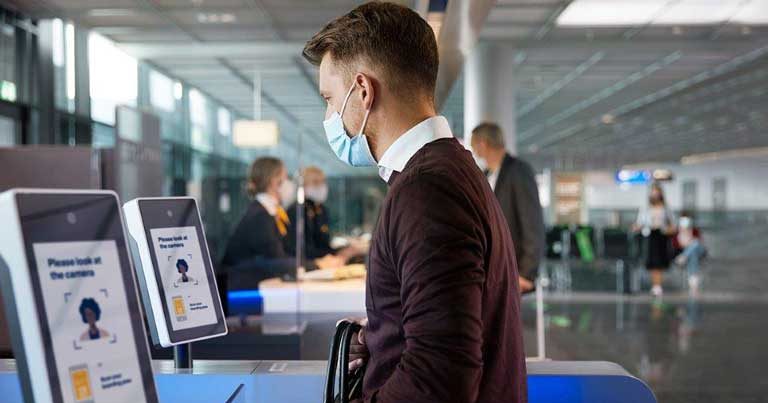
In order to facilitate international air travel, the International Air Transport Association (IATA) has released standards using digital IDs and biometrics.
In collaboration with several airlines working under the One ID initiative, the "Recommended Practice on Digitalization of Admissibility" standards have been developed.
In a recent blog post from IATA, the organization asserts that despite the fact that several airlines have already applied biometrics to the check-in process, passengers still have to prove their eligibility at a check-in desk or boarding gate.
As part of the new standard, passengers will be able to obtain biometrically-secured digital IDs directly from governments in advance of their trip in an attempt to facilitate the implementation of One ID.
“By enabling passengers to prove their admissibility to their airline before they get to the airport, we are taking a major step forward,” comments Nick Careen, IATA’s senior vice president for operations, safety and security.
As Careen points out, the IATA global passenger survey revealed that 83 percent of respondents are willing to share their immigration information for expedited processing, compared to 73 percent in 2021.
“That is why we are confident this will be a popular option for travelers when it is implemented. And there is a good incentive for airlines and governments as well with improved data quality, streamlined resourcing requirements and identification of admissibility issues before passengers get to the airport,” Careen adds.
Passengers will have greater control over their data under the new standards, according to IATA. Verified approvals, not the data behind them, being shared without the need for intermediaries.
The standards will help airlines and governments as well, he says. The rules will improve data quality, streamline resourcing requirements and other issues by preparing passengers prior to arriving at an airport, he says.
“While a government may request detailed personal information to issue a visa, the only information that will be shared with the airline is that the traveler has a visa and under which conditions,” explains Louise Cole, IATA’s head of customer experience and facilitation.
“No large databases are being built that need protecting. By design, we are building simplicity, security and convenience,” Cole says.
IATA says the standard is interoperable with the International Civil Aviation Organization’s (ICAO) own standards, including for the Digital Travel Credential.